If you’re trying to understand your cycle, ovulation is often the piece that makes everything else fall into place. It helps us understand why vaginal discharge suddenly changes halfway through the month, when it’s the best time to conceive, and how changes in your cycle can sometimes point back to changes in ovulation.
However, the part about ovulation that causes so much confusion is the timing. So, when does ovulation occur? That “day 14” idea is a myth. In reality, ovulation happens 12 to 14 days before your next period begins.1 Once you understand that, the rest of the cycle becomes much easier to read.
On this page
- What exactly happens during ovulation?
- When does ovulation occur?
- What is the fertile window?
- Can your body tell you that ovulation is coming?
- How can you track ovulation?
- What if you are trying to get pregnant?
- What if you are trying to avoid pregnancy?
- How does hormonal birth control affect ovulation?
- What if you are not ovulating regularly?
- A note on ovulation
- When to see a doctor?
Key takeaways
- Ovulation occurs when an ovum (egg) is released from an ovary.
- Typically, this occurs 12 to 14 days before the start of your next period, not at day 14 of your cycle.
- The fertile window is the five days before ovulation, plus the day of ovulation.
- Cervical mucus that is clear and slimy, and a positive test for an increase in luteinizing hormone may indicate impending ovulation.
- Variations in ovulation (irregular or absent) may be associated with the following: hormonal conditions, significant fluctuations in weight or total energy intake, thyroid dysfunction, elevated prolactin concentrations, lactation, and perimenopause.
What exactly happens during ovulation?
Ovulation is when the ovary releases a mature ovum. Before it happens, follicle-stimulating hormone (FSH) stimulates the growth of ovarian follicles. A follicle is a small fluid-filled sac that contains an undeveloped ovum. One of them is usually selected to grow.
During this time, the follicle develops and produces increasing amounts of estrogen, which causes the pituitary gland to release an abrupt surge of luteinizing hormone (LH). This will result in the ovum being released from the follicle. Once ovulation occurs, the follicle becomes the corpus luteum, a temporary hormone-producing structure that forms after ovulation, and secretes progesterone, which prepares the uterine lining for implantation. If no conception occurs, hormone levels fall, and menstruation begins.
When does ovulation occur?
Ovulation typically occurs 12 to 14 days before your next period begins.1 It is often believed that ovulation happens on day 14, but that is only an estimate based on a textbook 28-day cycle. Your ovulation day may be earlier or later if your cycle is shorter or longer, and the timing can also vary from one menstrual cycle to another.
| Usual cycle length | Approximate ovulation timing |
| 24 days | Around days 10–12 |
| 28 days | Around days 14–16 |
| 32 days | Around days 18–20 |
| 35 days | Around days 21–23 |
The first part of the cycle, known as the follicular phase, can last anywhere from 10 to 24 days, and even women with relatively steady periods can experience some variation from one month to the next.23
An extra few days on your cycle could mean ovulation was a little later. Illness, high levels of stress, dramatic weight fluctuations, rigorous exercising, breastfeeding, and all sorts of hormonal conditions can cause a delay. Remember, having one-off cycles isn’t necessarily a problem.
What is the fertile window?
The fertile window is the part of your cycle when the chances of you getting pregnant are significantly higher. However, the ovulation day by itself doesn’t provide the complete answer.
Sperm can survive inside the reproductive tract for about three to five days, while the egg can be fertilized for only about 12 to 24 hours after release. That is why sex in the days before ovulation matters more than sex on the day itself.2
According to the American Society for Reproductive Medicine (ASRM), the fertile window is defined as the consecutive six-day duration ending on the day of ovulation. The chance of conception is generally highest in the one to two days before ovulation.2 This means you do not have to identify one exact moment when the ovum is released for pregnancy to occur.
Can your body tell you that ovulation is coming?
Some women can pick up a pattern each month, while for others there is little or no indicator. Just because you can’t ‘feel’ ovulation doesn’t mean it hasn’t happened.
Signs of ovulation at a glance
| Sign | What you may notice | What it can tell you |
| Cervical mucus | Clearer, wetter, slippery, and stretchy discharge | Fertile days may be approaching |
| Basal body temperature (BBT) | A small, sustained rise in resting temperature | Ovulation has probably already occurred |
| Luteinizing hormone (LH) | A positive urine ovulation predictor test | Ovulation is likely approaching |
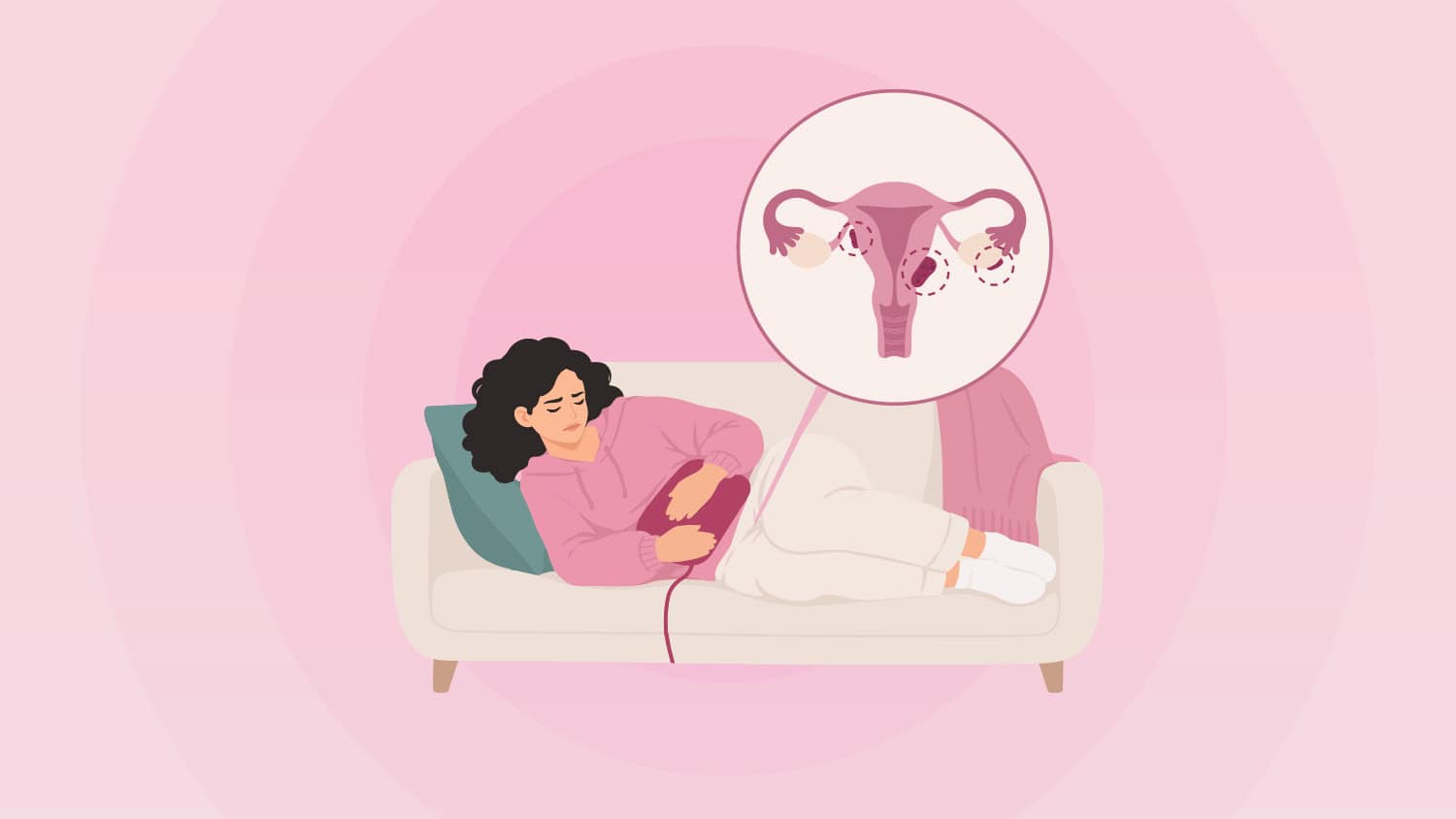
| Ovulation pain | A mild one-sided lower-abdominal ache | May occur around ovulation, but does not confirm it |
Cervical mucus seems to become clear, slippery, and stretchy
One of the most helpful indicators is a change in cervical mucus (the fluid produced by the cervix that appears as vaginal discharge). Before ovulation, as estrogen rises, the mucus becomes clearer, thinner, and more slippery, and it can be stretched between your fingers, much like raw egg white.1
However, you don’t have to experience textbook “egg-white” discharge to be ovulating. Sexual intercourse, vaginal infections, medications, lubricants, breastfeeding, and your usual discharge pattern may all change what you notice.1
Some women may experience slight pelvic pain.
A dull pain on one side of the lower abdomen may be experienced around ovulation and has been termed mittelschmerz, or ‘middle pain.’ This type of pain should not be confused with more severe, persistent, or abnormal pelvic pain, which should be investigated by a healthcare professional.
Basal body temperature increases following ovulation
Progesterone results in a slight increase in the basal body temperature (the temperature of your body at complete rest). Persistent elevation may indicate that ovulation has already taken place.1 Since the temperature rises afterward, this is more useful in identifying a pattern than in predicting ovulation in real time.
Luteinizing hormone rises before ovulation
Luteinizing hormone (LH) begins to surge about 36 hours before ovulation and peaks around 12 hours beforehand. This is why urine ovulation predictor kits look for the LH surge to indicate that ovulation is approaching.4
How can you track ovulation?
You don’t need to track ovulation unless it is helpful for you. If you’re trying to get pregnant or have irregular cycles, there are many options:
First, determine your normal cycle length. Cycle day 1 is the first day you have menstrual bleeding. If your cycles are fairly regular, the dates can give an approximation, but a calendar or period-tracking app can’t tell whether an ovum was actually released. Our Period Calculator estimates your likely fertile days from your cycle length as a starting point.
Ovulation predictor kits look for the luteinizing hormone surge that occurs in the urine before ovulation. A positive test usually indicates that ovulation is likely to take place within the next one or two days, although this is an indication rather than an absolute confirmation.3 To use one, start testing a few days before you expect to ovulate (around day 10 if your cycle is 28 days), test at the same time each day, and follow the kit’s instructions on timing, since some brands recommend morning urine and others afternoon.10 Changes to the cervical mucus may provide further indication, especially when the consistency of the discharge becomes more watery, transparent, and more lubricating.
When a clinician wants to verify ovulation by blood tests, they may test progesterone levels. It is generally checked about one week before the expected next period rather than automatically on day 21, since not all women have a 28-day cycle.3
What if you are trying to get pregnant?
Pinpointing one specific ovulation day can be more stressful than helpful. It is better to ensure sperm are in the system during the fertile window, rather than for the precise hours until ovulation occurs.
Having sex every day or every other day during your fertile window gives the highest chance of conception. For most couples, sex two or three times a week works nearly as well.2 If you have irregular periods, you can discuss with your OB-GYN to make an informed decision.
What if you are trying to avoid pregnancy?
A predicted ovulation date is never a guaranteed “safe day”. The fertile period may vary even in normal cycles, and sperm can remain alive for several days before ovulation.2
Fertility-awareness approaches can be used as a form of contraception, but this demands careful observation and specific criteria to determine the fertile days. If contraception is a priority, ask your healthcare provider about the effectiveness of other methods, rather than relying solely on calculating the days of the month.1
How does hormonal birth control affect ovulation?
Combined hormonal birth control methods, including the pill, patch, and vaginal ring, mainly prevent pregnancy by stopping ovulation. If you use one of these methods correctly, you are not following a typical ovulatory cycle, and bleeding during hormone-free days does not mean that ovulation occurred.5
What if you are not ovulating regularly?
If an ovum is not released during the cycle, it is known as an anovulatory cycle. It can be normal to have the odd irregular cycle, but recurrent anovulation is something to consider, as it may have an impact on your bleeding pattern and fertility.
Common causes include PCOS (polycystic ovary syndrome), now known as PMOS (Polyendocrine Metabolic Ovarian Syndrome),9 being significantly over- or underweight, very low food intake, vigorous exercise, thyroid disease, high prolactin, and perimenopause.36 Ovulation can take time to resume after pregnancy, especially if you are breastfeeding.
What if you are in the first two years after your first period?
If you are a teen, ovulation may be irregular during the first years after your first period (menarche) because the hormone system connecting the brain and ovaries is still maturing. ACOG notes that anovulatory cycles are common in these early years, although cycles generally become more regular over time.7
Bleeding can still occur in the absence of normal ovulation. Without ovulation, there may be no increase in progesterone, and the uterine lining may bleed irregularly. Therefore, you should get yourself checked by a professional if you are experiencing repeated long cycles.
Repeated anovulation can expose the endometrial lining to estrogen without enough progesterone. Over time, this can contribute to endometrial hyperplasia, an abnormal thickening of the uterine lining that can increase the risk of endometrial cancer in some cases. This is why repeated long or absent cycles should be evaluated by a healthcare professional.8
A note on ovulation
You now know that ovulation is more about observing patterns instead of marking a date on a calendar. If you want to learn about your own cycle, look for consistency in the patterns, such as your typical cycle duration, pattern of cervical mucus, and an LH test if indicated, which can help you better understand everything. If your periods become very irregular or disappear altogether, that pattern is useful information too and deserves medical attention.
When to see a doctor?
While some variability in the timing of your cycle is normal, if it continues to vary, you should talk to your healthcare provider. This includes the following36:
- Your periods continue to be irregular.
- You have no period for three months and are not pregnant or breastfeeding.
- You develop new excess facial or body hair.
- You develop significant acne.
- You have nipple discharge.
- You have unexplained weight changes.
- You have severe or persistent pelvic pain.
If you are attempting to become pregnant, fertility testing is normally suggested after 12 months of normal unprotected sexual contact if you are under 35 and after six months if you are 35 or over. This testing may need to occur sooner than this after 40 or if there is an existing medical condition.3
Frequently asked questions
Yes. A lot of women have no signs of ovulation or do not know they are experiencing it. Therefore, not having any symptoms does not mean they didn’t ovulate.
Yes. Sperm can live for several days in the reproductive tract, so having sex in the days leading up to ovulation can lead to conception.
Only for a short time. The egg survives about 12 to 24 hours after it is released, so the chance of pregnancy drops quickly after ovulation day. The highest chance is in the two days before ovulation and on the day itself.2
Yes. Having irregular periods doesn’t mean you won’t ovulate, but that you may ovulate irregularly and/or not every cycle.
Extreme or long-term stress can disrupt the hormonal feedback that controls ovulation. Normal stress of daily life does not always affect each cycle.
No. The ovaries do not have to take turns. Either ovary may release an ovum in a given cycle, and the same ovary can ovulate in consecutive cycles.
More than one ovum can sometimes be released during the same ovulatory window, which is one way fraternal twins can occur. This is different from having two separate ovulation events days or weeks apart in the same menstrual cycle.
Very light spotting can happen around the middle of a cycle, but bleeding between periods can have other causes too. If spotting is recurrent, heavy, painful, or unusual for you, discuss it with a healthcare professional.
Last medically reviewed on
References
Our commitment to accuracy is paramount; we use high-quality sources, including peer-reviewed studies, to support the facts in our articles. Learn more about our Editorial Process.
- American College of Obstetricians and Gynecologists (ACOG). Fertility awareness-based methods of family planning. acog.org
- Practice Committee of the American Society for Reproductive Medicine. Optimizing natural fertility: a committee opinion. Fertil Steril. 2022;117(1):53-63. doi:10.1016/j.fertnstert.2021.10.007. asrm.org
- Practice Committee of the American Society for Reproductive Medicine. Fertility evaluation of infertile women: a committee opinion. Fertil Steril. 2021;116:1255-1265. asrm.org
- Office on Women's Health (OASH), U.S. Department of Health and Human Services. Your menstrual cycle. (Last updated: January 13, 2025). womenshealth.gov
- American College of Obstetricians and Gynecologists (ACOG). Combined hormonal birth control: pill, patch, and ring. acog.org
- Office on Women's Health (OASH), U.S. Department of Health and Human Services. Period problems. (Last updated: October 2025). womenshealth.gov
- American College of Obstetricians and Gynecologists (ACOG). Menstruation in girls and adolescents: using the menstrual cycle as a vital sign. Committee Opinion No. 651. (December 2015). acog.org
- American College of Obstetricians and Gynecologists (ACOG). Endometrial hyperplasia. acog.org
- Johns Hopkins Medicine. Polyendocrine metabolic ovarian syndrome (PMOS). hopkinsmedicine.org
- Cleveland Clinic. Ovulation: Calculating, process, pain & other symptoms. my.clevelandclinic.org
Update history
Our team monitors the health and wellness space to keep articles current.
Current version (September 12, 2026) — Medically reviewed by Dr. Sadaf Iftikhar, MBBS, FCPS. Written by Dr. Aqsa Munir, MBBS.