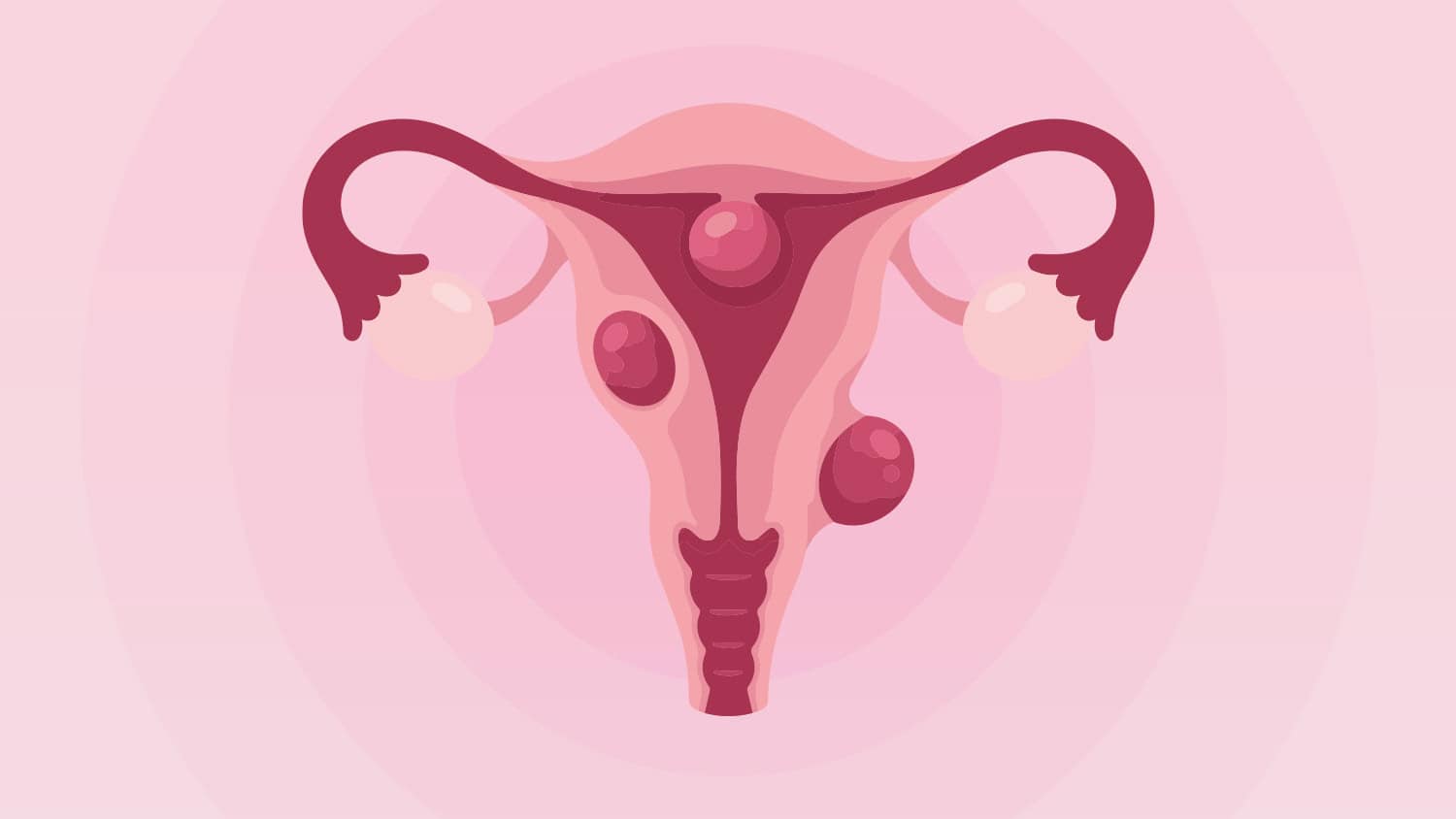
Fibroids do not usually stop you from getting pregnant, and most women with fibroids have a healthy pregnancy.1 Fibroids are noncancerous growths in or on the wall of the uterus, and where a fibroid grows matters more than whether you have one. Those that grow into or press on the inside of the uterus are the most likely to cause fertility problems.12
During pregnancy, fibroids are linked to a higher chance of some problems, such as preterm birth and C-section, but most women with fibroids do not have them.3 If you want to become pregnant and are told you have fibroids, this can understandably make you anxious.
On this page
- Can you get pregnant with fibroids?
- Can fibroids cause infertility?
- What happens to fibroids while you are pregnant?
- Fibroids during pregnancy: Pain and bleeding
- Risks fibroids can add in pregnancy and birth
- Getting pregnant with fibroids: What doctors consider
- How to deal with fibroids during pregnancy
- When to see a doctor?
Key takeaways
- Most fibroids do not stop you from getting pregnant.
- Fibroids that change the shape of the inside of the uterus are the most likely to cause fertility problems.
- Most pregnancies with fibroids are uncomplicated.
- Fibroids are linked to higher chances of preterm birth (before 37 weeks) and C-section, but most women with fibroids do not have these problems.
- During pregnancy, the main focus of care is symptom management and monitoring.
Can you get pregnant with fibroids?
Yes. Most women with fibroids can get pregnant and have a healthy pregnancy.12 Where a fibroid grows, how big it is, and how many you have matter most.1 Fibroids that grow into or press on the inside of the uterus are the most likely to cause fertility problems.12 Most women with fibroids are not infertile.2
About 3 in 4 women develop at least one fibroid in their lifetime.4 They show up in roughly 2% to 11% of pregnancies.3 Black women tend to develop fibroids earlier and often have more severe symptoms.5 Fibroids are not cancer, and they very rarely turn into cancer.6
The research has limits. The American Society for Reproductive Medicine (ASRM) found too little evidence to say fibroids in general make pregnancy less likely. It treats fibroids that reach the inside of the uterus as a separate case.7
Can fibroids cause infertility?
They can, but usually only certain types. Infertility means trouble getting pregnant. Fibroids are most likely to play a part when they change the shape of the uterine cavity (the space inside the uterus where a pregnancy grows). Fibroids on the outer wall rarely cause this problem.18
| Fibroid type | Where it grows | Link to fertility |
| Submucosal | Under the uterine lining | The type most linked to infertility.12 It can make it harder for a fertilized egg to attach (implantation).1 |
| Intramural | In the muscle wall | Depends on whether it pushes on or changes the cavity.18 Very large ones (over 6 cm, about 2.4 inches) can also lower fertility.2 |
| Subserosal | On the outer surface | Not usually linked to fertility problems.18 |
Fibroids may get in the way in these ways:
- Cavity shape: A fibroid can distort the space inside the uterus.1
- Implantation: A changed lining can make it harder for a fertilized egg to attach.1
- Blocked tubes: A fibroid near a fallopian tube may block the path between egg and sperm.2
Fibroids may not be the only cause of infertility, since many factors can be involved, sometimes more than one at a time.28 A fertility check usually looks at the whole picture.
What happens to fibroids while you are pregnant?
Fibroids can grow in early pregnancy, when hormone levels and blood flow to the uterus rise.3 They then tend to stay about the same size in the later months.3 Most fibroids cause no symptoms during pregnancy, and pregnancies with fibroids are generally uncomplicated.3
Fibroids and pregnancy often overlap, and many women first learn they have fibroids at an early pregnancy ultrasound.1 Here is what is typical:
- First to second trimester: In some studies, as many as 71.4% of fibroids grew between the first and second trimesters (the first 6 months of pregnancy).3
- Later pregnancy: Fibroids usually stay about the same size.3
- Small fibroids: Those measuring 1 to 3 cm (about an inch and a quarter or less) typically stay the same size.3
- After birth: Fibroids often shrink. In one group of women, 70% saw fibroid volume fall by more than half between early pregnancy and 3 to 6 months after birth. About 10% saw their total fibroid volume increase.3
Problems are more likely with several fibroids, fibroids larger than 5 cm (about 2 inches), or fibroids low in the uterus.3
Fibroids during pregnancy: Pain and bleeding
Pain is the most common fibroid symptom during pregnancy, and it often appears late in the first trimester or early in the second.3 Some women also have pelvic pressure or vaginal bleeding.3 Fibroids are only one possible cause of new pain or bleeding in pregnancy.
The best-known cause of fibroid pain is red degeneration. This happens when a fibroid outgrows its blood supply and part of it starts to die.13 It affects about 8% of pregnant women with fibroids, or roughly 1 in 12.13 It usually causes sudden pain in one spot, sometimes with a mild fever, nausea, or vomiting.3
Here is how doctors usually monitor these symptoms:
- Ultrasound: This is the main test for checking a fibroid’s number, size, and location.3
- Blood flow check: A special ultrasound called Doppler can show whether blood is still reaching the fibroid.3
- MRI (magnetic resonance imaging): This scan may help tell red degeneration apart from torsion (a fibroid on a stalk twisting), which can need surgery.3
Risks fibroids can add in pregnancy and birth
Fibroids are linked to a higher chance of some pregnancy and birth problems, but most women with fibroids give birth vaginally without complications.3 About 10% to 30% of pregnant women with fibroids have a complication at some point in pregnancy, labor, or the weeks after birth.3
These figures compare the odds for women with fibroids and women without them. They come from studies that show a link, not proof that fibroids are the cause.
| Problem | What it means | Odds with fibroids |
| Preterm birth | Birth before 37 weeks | About 1.4 to 1.5 times higher39 |
| Placental abruption | The placenta separates from the uterus too early | About 1.6 to 2.6 times higher39 |
| Placenta previa | The placenta covers the opening of the cervix | About 2.2 times higher3 |
| Malpresentation | The baby is not head down near term, as in breech | About 2.7 times higher3 |
| C-section | Birth through a cut in the belly and uterus | About 2.1 to 2.6 times higher39 |
| Postpartum hemorrhage | Heavy bleeding after birth | About 1.8 to 3 times higher39 |
| Lower birth weight | A baby born smaller than average | About 4 ounces (118 grams) lower on average9 |
The odds depend partly on the fibroid. Risk of placental abruption is highest with fibroids under the lining or behind the placenta, and with very large fibroids.3 Fibroids low in the uterus are more often linked to a C-section and heavy bleeding after birth. A planned C-section may be considered when a large fibroid low in the uterus sits between the baby and the cervix.3
The quality of this research is limited, so your own risk may differ from these numbers.3
Can fibroids cause miscarriage?
The evidence is mixed. A review of nine studies and more than 20,000 pregnant women found no link between fibroids and pregnancy loss, but it did not look at where the fibroids were. The risk is likely higher in women with several fibroids.3 ASRM found no high-quality studies that settle the question.7
Getting pregnant with fibroids: What doctors consider
Having a fibroid does not automatically mean it should come out before pregnancy.17 Doctors weigh your age, past pregnancies, symptoms, and the size and location of your fibroids.3
Removal before trying is more often discussed when:
- A fibroid changes the shape of the uterine cavity, even without symptoms.7
- Fibroids cause symptoms such as heavy bleeding.3
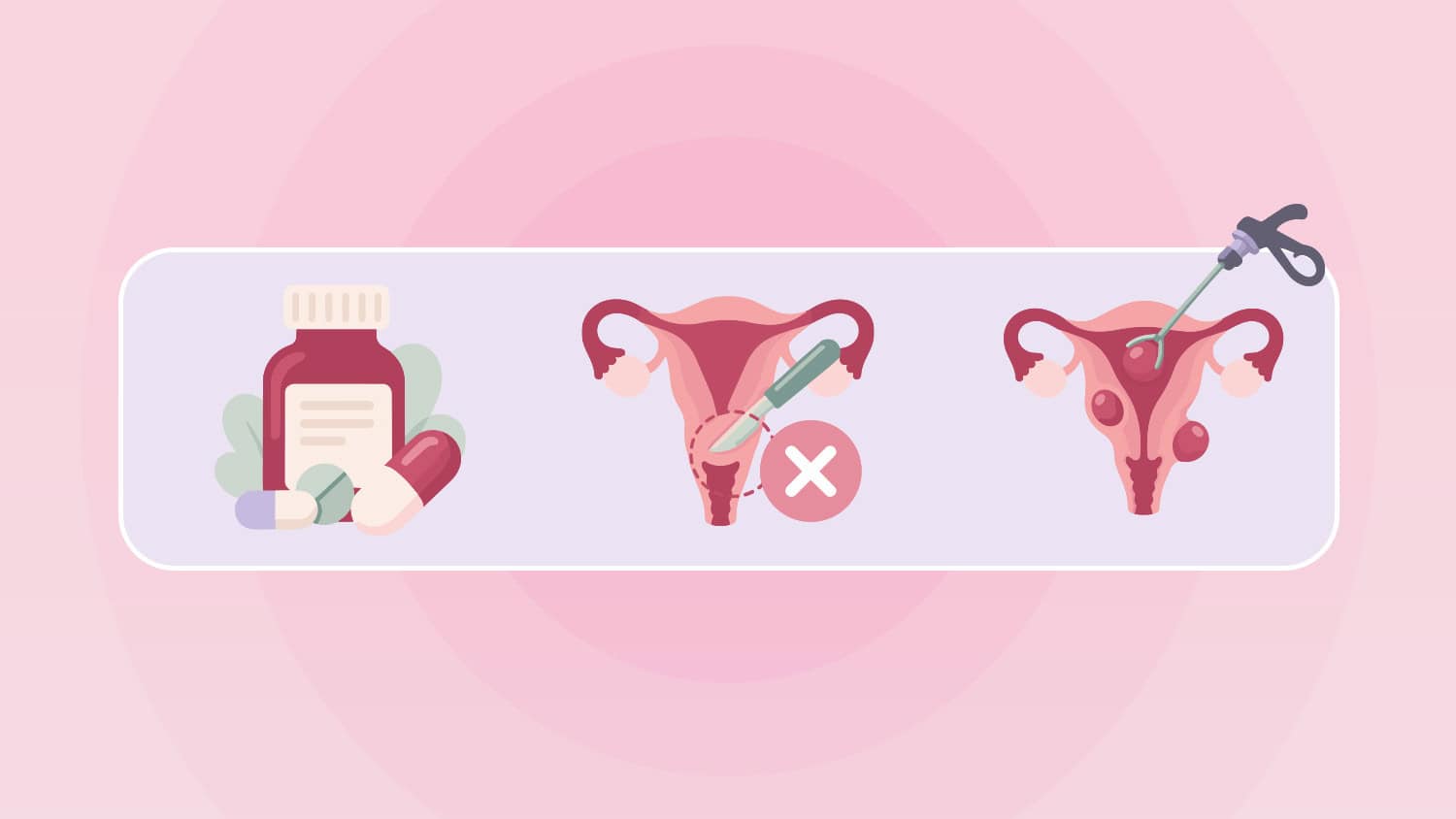
Removal is generally not done to improve pregnancy chances when a fibroid causes no symptoms and leaves the cavity unchanged.7 Long-term medicines are not usually helpful for women trying to conceive, as symptoms can return quickly when they stop.3 Uterine artery embolization (UAE, also called uterine fibroid embolization or UFE) blocks a fibroid’s blood supply. It is not usually the first choice for women who want to become pregnant, because less is known about pregnancy afterward.10 A 2023 review of five guidelines found that most advise against it for women planning a pregnancy, and that newer procedures belong in research studies for now.8
Timing after myomectomy
A myomectomy is surgery that removes fibroids and leaves the uterus in place.11 Doctors usually discuss a waiting period so the uterus can heal:
- Healing: Imaging studies suggest healing can take 3 months, and sometimes up to 6.3
- No set rule: A systematic review found too little data to set a minimum wait.3
- A trade-off: Waiting longer gives more healing time, but fertility falls with age and fibroids can come back.3
- Your surgery matters: The size and location of the fibroids and the type of surgery all shape this decision.3
Uterine rupture (a tear in the uterine wall) after myomectomy is uncommon. In one review, the rate was about 0.93%, or roughly 1 in 100. It can happen at any point in pregnancy, especially in the third trimester.3 Prior myomectomy may also make a C-section more likely.11
How to deal with fibroids during pregnancy
Care for fibroids during pregnancy mostly means watching the fibroids and managing symptoms. Fibroids that cause no symptoms need no treatment.1 Your OB-GYN may suggest extra ultrasounds, because fibroid growth can change your risks.3
- Monitoring: Scan schedules vary. One review in the journal of the International Federation of Gynecology and Obstetrics (FIGO) suggests monthly ultrasounds after the first-trimester check.3
- Rest: Rest and drinking enough fluids can be part of a pain plan.1 A heating pad or warm shower may also help.1
- Pain relief: Ask your OB-GYN before taking any pain medicine. Ibuprofen and naproxen are nonsteroidal anti-inflammatory drugs (NSAIDs). The U.S. Food and Drug Administration (FDA) advises avoiding NSAIDs from 20 weeks of pregnancy on, unless a doctor specifically recommends them.12
- Hospital care: Severe pain may need a hospital stay with fluids through a vein.3
Fibroid removal is not routinely done during pregnancy because it carries risks of severe bleeding, pregnancy loss, and preterm birth.3 Surgery is kept for rare situations, such as a twisted fibroid or severe pain that does not improve with other care.13 Removing fibroids during a C-section is also generally avoided.3
When to see a doctor?
Book a visit with your OB-GYN or primary care doctor if any of these apply:
- You have fibroids and are planning a pregnancy.
- You are having trouble getting pregnant and have fibroids or fibroid symptoms.
- You have had a myomectomy and want to talk about timing.
- You have had more than one pregnancy loss.
- You have new pelvic pressure or mild pain during pregnancy.
- You are pregnant and have any vaginal bleeding, even light spotting.
Seek emergency care if:
- You are soaking through one or more pads or tampons every hour for more than two hours in a row.13
- You have heavy bleeding with dizziness or lightheadedness, shortness of breath, or chest pain.13
- You are pregnant or could be pregnant and have heavy bleeding or severe pain.14
- You are pregnant and your baby is moving less than usual or has stopped moving.14
- You are pregnant and have fluid leaking from your vagina or a fever of 100.4°F or higher.14
Frequently asked questions
Not automatically. Most pregnancies with fibroids are routine. Your doctor may add care if you have several fibroids, a fibroid larger than 5 cm (about 2 inches), or one low in the uterus.
Not necessarily. Most women with fibroids can have a vaginal birth. A planned C-section may be considered if a large fibroid low in the uterus sits between the baby and the cervix.
Often, yes. Most fibroids get smaller in the months after birth, but about 10% of women may see an increase in total fibroid volume.
Usually not. Fibroids measuring 1 to 3 cm (about an inch and a quarter or less) typically stay the same size during pregnancy, and complications are more often linked to larger fibroids.
It can. Fibroids inside the uterine cavity and very large fibroids in the muscle wall (over 6 cm, about 2.4 inches) are the most likely to lower fertility.
Often, yes. Fibroids that do not change the shape of the uterine cavity usually do not need to be removed first. If one does, your fertility specialist may suggest removing it before IVF.
Last medically reviewed on
References
Our commitment to accuracy is paramount; we use high-quality sources, including peer-reviewed studies, to support the facts in our articles. Learn more about our Editorial Process.
- Cleveland Clinic. What to know about uterine fibroids and pregnancy. (Published: March 4, 2026). health.clevelandclinic.org
- American Society for Reproductive Medicine (ASRM). Fibroids and fertility. (Revised: 2023). reproductivefacts.org
- Ramasauskaite D, Purandare N, Diaz I, et al. Fibroids and pregnancy. Int J Gynaecol Obstet. 2026;172(1):51–58. doi.org
- Lakabi R, Harth S, Meinhold-Heerlein I, et al. Diagnosis and classification of uterine fibroids. Int J Gynaecol Obstet. 2025;171(2):566–573. doi.org
- Navarro A, Bariani MV, Yang Q, Al-Hendy A. Understanding the impact of uterine fibroids on human endometrium function. Front Cell Dev Biol. 2021;9:633180. doi.org
- Eunice Kennedy Shriver National Institute of Child Health and Human Development (NICHD). Uterine fibroids: other FAQs. (Last reviewed: November 2, 2018). nichd.nih.gov
- American Society for Reproductive Medicine (ASRM). Removal of myomas in asymptomatic patients to improve fertility and/or reduce miscarriage rate: a guideline. Fertil Steril. 2017;108(3):416–425. asrm.org
- Michos G, Dagklis T, Papanikolaou E, et al. Uterine leiomyomas and infertility: a comparison of national and international guidelines. Cureus. 2023;15(12):e50992. doi.org
- Wang X, Wang G, Han R, et al. Uterine fibroids increase the risk of preterm birth and other adverse birth events: a systematic review and meta-analysis. Transl Pediatr. 2022;11(6):978–986. pmc.ncbi.nlm.nih.gov
- American College of Obstetricians and Gynecologists (ACOG). Uterine artery embolization. (Last reviewed: May 2026). acog.org
- Cleveland Clinic. Myomectomy. (Last updated: January 11, 2023). my.clevelandclinic.org
- U.S. Food and Drug Administration (FDA). FDA recommends avoiding use of NSAIDs in pregnancy at 20 weeks or later because they can result in low amniotic fluid. (Content current as of: September 1, 2022). fda.gov
- American College of Obstetricians and Gynecologists (ACOG). Heavy menstrual bleeding. (Last reviewed: May 2026). acog.org
- Centers for Disease Control and Prevention (CDC). Urgent maternal warning signs. (Last updated: May 15, 2024). cdc.gov
Update history
Our team monitors the health and wellness space to keep articles current.
Current version (November 18, 2026) — Medically reviewed by Dr. Sadaf Iftikhar, MBBS, FCPS. Written by Dr. Ghanwa Imran, MBBS.