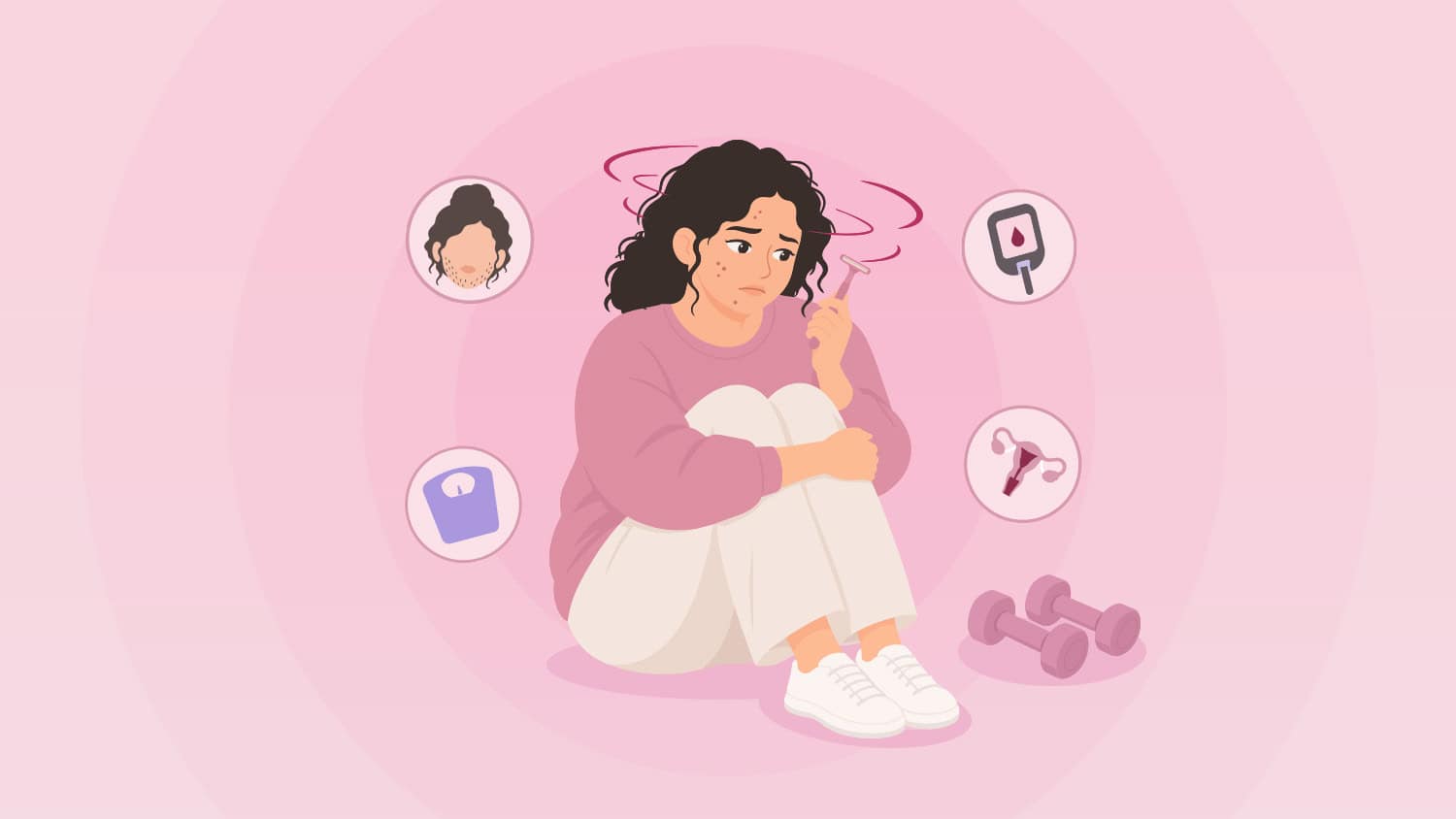
According to the World Health Organization (WHO), up to 70% of women with PCOS (polycystic ovary syndrome), now known as PMOS (Polyendocrine Metabolic Ovarian Syndrome), don’t even know they have it.1 The condition is believed to affect about 1 in 8 women.2 That’s truly alarming, as PMOS is more than just irregular periods. It can also influence blood sugar levels, skin, hair, sleep, emotions, and ultimately your overall health.
And because there are so many variations of symptoms, generic solutions like “lose weight” and “cut carbs” are prescriptive, with no actual plan for how to get there. Effective self-care for PMOS should do the opposite: guide you in prioritizing concerns, provide guidance on home management options, and alert you when to consult your doctor.
On this page
- What is PMOS?
- Which PMOS symptom should you address first?
- What should you eat when you have PMOS?
- What type of exercise is best for PMOS?
- When should long gaps between periods concern you?
- What should you do if you feel tired all day?
- How can you manage acne, hirsutism, and alopecia?
- When does PMOS self-care need medical treatment?
- How can PMOS affect your emotional health?
- What can your PMOS self-care plan look like this week?
- When to see a doctor?
Key takeaways
- PCOS has been officially renamed polyendocrine metabolic ovarian syndrome (PMOS).
- There isn’t one “PMOS diet,” and generally you don’t have to cut out whole food groups.
- Physical activity helps even when your weight does not change.
- No period for over three months? Get it checked out by a doctor.
- Acne, unwanted hair, tiredness, poor sleep, anxiety, and feeling down are all things that should be addressed.
- Self-care complements treatment; it is not a substitute for it.
What is PMOS?
PMOS, previously known as PCOS, is a relatively common endocrine and metabolic disorder that may influence ovulation, menstruation, androgen levels (hormones like testosterone that everyone’s body makes some of), skin, hair growth, fertility, and long-term health.2
There was a name change in May 2026. The previous name, “polycystic ovary syndrome,” was confusing as it suggested that the syndrome was primarily a disorder of ovarian cysts, as not all women with the condition have ovarian cysts.2
The new term PMOS is more comprehensive and descriptive.
- Polyendocrine best describes the multiple hormone systems affected.
- Metabolic recognizes the complications such as insulin resistance (when the body does not respond properly to insulin, the hormone that helps control blood sugar) and elevated risk of diabetes.
- Ovarian retains its significance in relation to ovulation and reproductive health.
Even as the new name takes hold, you will still see PCOS in clinics, older studies, and search results. The condition remains the same; authorities have only changed the name.
Cycles are often irregular during the first year after menarche (the first menstrual period), so doctors use different diagnostic criteria for teenagers. In adolescents, a PMOS diagnosis generally requires both persistent irregular menstrual cycles, judged according to the time since menarche, and signs or blood-test evidence of higher androgen activity. Other possible causes must be excluded first. Pelvic ultrasound and anti-Müllerian hormone (AMH) levels are not recommended for diagnosing PMOS during adolescence.3 In adults, a diagnosis generally requires two of three features: irregular or absent ovulation, higher androgen levels (by symptoms or blood test), and polycystic-appearing ovaries on ultrasound, after other causes are ruled out.3
Which PMOS symptom should you address first?
PMOS manifests itself in different ways. Therefore, it becomes quite exhausting trying to rectify everything at once. As a solution, start with the symptom that’s been affecting you the most. For example:
- If you are going months without a period, start there
- If painful acne has been affecting your life, treat it
- If you are feeling tired all the time, it’s time to address it
According to the guidelines, the treatment of PMOS should be individualized depending on your symptoms, health risks, quality of life, and personal goals.3
This is important because two women with PMOS could require very different approaches. One may need advice on getting her periods back on track. Another could have regular periods but is dealing with excess facial hair and insulin resistance. A third may be trying for a baby. A focused plan is far more useful than the ten changes you can’t even maintain.
What should you eat when you have PMOS?
There is no approved foods list that all women with PMOS have to avoid at any cost. Additionally, there isn’t presently any proof that a particular diet is the most beneficial for all women with PMOS.3 You do not need to get rid of gluten, dairy, fruit, or carbohydrates straight away.
The goal is instead to fill up your meals with some protein, a high-fiber carbohydrate, some vegetables or fruit, and some healthy fat. For example, eggs with whole grain toast and fruit, chicken or beans with rice and vegetables. We are not trying to make all your meals perfect. We are trying to make the typical meals you eat work better for you.
If spacing meals by long intervals increases hunger, try eating more frequently. You may find that this strategy benefits you more than another restriction. If you have insulin resistance, prediabetes, or diabetes, your nutrition needs may be different, and a registered dietitian can help you modify your meal plan.
For women who are overweight or obese, small weight loss may benefit certain metabolic parameters and menstrual complaints.4 However, healthy food and exercise are still beneficial regardless of whether or not women lose weight.13
That is an important distinction. An effective PMOS plan should make your health better, not make you feel like nothing is real unless the scale shows a difference.
What type of exercise is best for PMOS?
For adults, the recommended amount is 150–300 minutes of moderate-intensity physical activity, or 75–150 minutes of vigorous-intensity physical activity, each week, along with muscle-strengthening activities for two or more days.3
When you start your exercise journey, understand that this time is the goal and not your starting requirement.
If you haven’t been exercising at all, a 10- or 15-minute walk is perfectly acceptable to start. Swimming, cycling, dancing, weight training, or whatever activity it is that you enjoy is perfectly fine.
Additionally, there is no evidence that any one type or intensity of exercise is better than another for PMOS.3 Your body doesn’t require a fashionable “PMOS workout.” It needs consistent activity that is suitable for your wellness and comfortable enough to maintain. Even if exercise doesn’t result in any weight loss, it has many benefits. For example, it enhances cardiovascular fitness, metabolic health, and your general well-being.3
When should long gaps between periods concern you?
Irregular periods are very common in PMOS, but very long gaps are still important. Infrequent ovulation can cause the uterine lining to become too thick over time. The medical term for this is endometrial hyperplasia.34
When ovulation is infrequent, the uterine lining may be exposed to estrogen without enough progesterone to balance it, which is often called unopposed estrogen. If this continues untreated, endometrial hyperplasia can increase the risk of endometrial cancer. The overall chance of endometrial cancer is still low, but long-standing untreated absence of periods increases that risk.345
Record the first day of each period. If you miss your periods for several months (amenorrhea), consult with your OB-GYN. The American College of Obstetricians and Gynecologists (ACOG) recommends workup if menses are absent for over three months without an underlying cause.6
Based on your circumstances and if pregnancy is a goal, your doctor can suggest hormonal contraceptives or intermittent progestin (a hormone that helps regulate the uterine lining) to control bleeding.4
Another confusion you should clear up is that irregular ovulation does not mean that ovulation never happens. You can still release an egg unexpectedly. If you are still having sex and do not want to conceive, do not rely on PMOS as a means of contraception.
What should you do if you feel tired all day?
Initially, make sure you sleep enough, keep regular sleep-wake schedules, and avoid caffeine in the late afternoon. If you continue to wake feeling exhausted, consult your doctor.
In women with PMOS, there is a greater prevalence of obstructive sleep apnea that occurs when breathing pauses or is restricted during sleep. Therefore, if you experience snoring in addition to unrefreshing sleep or significant daytime sleepiness, it needs to be evaluated.3 This is important because even lying in bed for eight hours doesn’t guarantee a good night’s sleep.
Other causes of fatigue, not related to PMOS, may include anemia, thyroid disease, depression, or other medical problems. Don’t dismiss every symptom as “just PMOS”. Fatigue is information your doctor can put to good use.
How can you manage acne, hirsutism, and alopecia?
Acne, hirsutism (increased body or facial hair), and alopecia (loss of hair from the scalp) may result from increased androgen action in PMOS.14
These are not life-threatening, but they do affect your appearance, which does not make them any less important. Continuous acne can have a detrimental impact on someone’s self-esteem. Having to shave your face every morning, or seeing your hair on your scalp thinning, can seriously affect your quality of life.
You can remove extra hair by shaving, threading, waxing, laser hair reduction, and electrolysis. You can also get a prescription treatment.4
And finally, stick to your simple skincare routine. Using abrasive scrubs, acids, or spot treatments over and over again can add irritation and not truly target the underlying hormonal issue.
Note: Severe, painful, lasting, or scarred acne should be assessed by a dermatologist.
When does PMOS self-care need medical treatment?
Just because you need medication doesn’t mean you’ve failed at PMOS self-care. Combined hormonal birth control pills can regularize periods and improve acne and excess hair when pregnancy is not desired.4
Metformin may be used when there are concerns about metabolism. It is an off-label use and is not FDA-approved specifically for PMOS.7
However, your treatment plan will look a lot different if your goal is pregnancy. Even though PMOS can cause irregular ovulation, it does not indicate you cannot get pregnant. When ovulation induction is needed, letrozole may be prescribed, and the international guideline recommends it as the first choice for women with PMOS who do not ovulate regularly and have no other infertility factors.3 In many countries this is an off-label use, meaning regulators have not specifically approved letrozole for ovulation induction.3 Other medications can also be used when required, e.g., gonadotropins (hormone injections that stimulate the ovaries).9
The ideal approach is to pair an achievable daily routine with medication for any symptoms that require treatment.
How can PMOS affect your emotional health?
Current guidelines recommend screening, as depression and anxiety are more prevalent in women with PMOS.3 Additionally, you should also never ignore body image distress and disordered eating.
These problems often tend to go unnoticed when appointments are limited to blood tests, weight, and menstrual cycles. If your lifestyle has been affected by PMOS, share these lifestyle worries with your healthcare professional.
If PMOS is changing how you eat, socialize, or think about yourself, tell your healthcare professional. These concerns belong in the appointment.
It can also help to step away from online content that makes every meal or symptom feel dangerous. Good medical information should make your next decision clearer.
What can your PMOS self-care plan look like this week?
| If this is your main problem | Start here | Speak with a doctor if |
| Missing periods | Track the first day of each period | You go more than 3 months without one |
| Low energy | Protect sleep and eat regularly | Fatigue persists, or you snore and wake unrefreshed |
| Inactivity | Start with 10–15 minutes of movement | You need help choosing safe exercise |
| Acne or unwanted hair | Keep skin care gentle | Acne scars or hair changes rapidly |
| Food and weight stress | Build balanced, repeatable meals | Restriction, bingeing, or food anxiety develops |
| Anxiety or low mood | Tell your healthcare professional | Symptoms affect everyday life |
Choose one row this week.
When to see a doctor?
Make an appointment with an OB-GYN or primary care doctor if:
- You have gone more than three months without a period and are not pregnant.6
- Your periods are more than 90 days apart, last longer than eight days,10 or become unusually heavy.8
- You are soaking through a pad or tampon every one to two hours.8
- Acne is scarring, facial or body hair is changing rapidly, or scalp hair loss is significant.
- You have persistent fatigue, loud snoring with unrefreshing sleep, or marked daytime sleepiness.3
- You are trying to become pregnant and your periods are very irregular.
- Anxiety, depression, body-image concerns, or disordered eating are affecting daily life.3
Seek emergency care if:
Frequently asked questions
Occasionally, a change in lifestyle can help maintain general health and alleviate a few symptoms. However, many women will require medication for irregular cycles, acne, excess hair, metabolic issues, or fertility. Therefore, the ideal solution is a combination of self-care and medical treatment.
No one diet works best for everyone with PMOS. Pick a healthy way of eating that meets your health requirements, is appropriate to your culture and budget, and is enjoyable for you.
No. Healthy eating, exercise, sleep, and preventive care matter regardless of the number on the scale. For individuals who are overweight or obese, modest weight loss may benefit symptoms, but weight alone should not be the sole target of treatment.
Yes, but doctors use different criteria for teens, since irregular cycles are common in the first year after a first period. A diagnosis generally needs both persistent irregular cycles and signs of higher androgen levels.
Yes. PMOS can occur in all body sizes. Lean women can have it. Overweight women can have it. Diagnosis is based on symptoms and medical tests.
Yes. A brisk walk is moderate physical activity and will count toward your weekly exercise target. You can gradually include more strength training or other activities if you find they suit you.
It may be considered, although there is little evidence to suggest substantial clinical benefits. There are currently no guidelines on type or dose. Talk to your healthcare professional before starting it.
No. You don’t have to completely avoid sugar if you have PMOS. Your general eating pattern is more important. If you have prediabetes or diabetes, consult your doctor or registered dietitian for carbohydrate choices.
Absolutely not. While birth control can regulate your period and help with acne or extra hair, it is not a cure for PMOS.
No. PMOS can cause irregular ovulation, but it doesn’t prevent pregnancy. Some women can conceive without treatment, but others may need assistance to induce ovulation.
Last medically reviewed on
References
Our commitment to accuracy is paramount; we use high-quality sources, including peer-reviewed studies, to support the facts in our articles. Learn more about our Editorial Process.
- World Health Organization. Polycystic ovary syndrome. January 22, 2026. who.int
- Teede HJ, Bahri Khomami M, Morman R, et al. Polyendocrine metabolic ovarian syndrome, the new name for polycystic ovary syndrome: a multistep global consensus process. The Lancet. 2026;407(10545):2329-2339. pubmed.ncbi.nlm.nih.gov
- Teede HJ, Tay CT, Laven JJE, et al. Recommendations From the 2023 International Evidence-based Guideline for the Assessment and Management of Polycystic Ovary Syndrome. Journal of Clinical Endocrinology & Metabolism. 2023;108(10):2447-2469. pubmed.ncbi.nlm.nih.gov
- American College of Obstetricians and Gynecologists. Polycystic Ovary Syndrome (PCOS). ACOG. Last reviewed: April 2025 acog.org
- American College of Obstetricians and Gynecologists. Endometrial Cancer. ACOG. Last reviewed: June 2025 acog.org
- American College of Obstetricians and Gynecologists. Amenorrhea: Absence of Periods. ACOG. Last reviewed: May 2024 acog.org
- Eunice Kennedy Shriver National Institute of Child Health and Human Development. What are the treatments for PCOS? National Institutes of Health. (Last reviewed: July 2, 2026). nichd.nih.gov
- American College of Obstetricians and Gynecologists. Heavy and Abnormal Periods. ACOG. Last reviewed April 2026. acog.org
- Eunice Kennedy Shriver National Institute of Child Health and Human Development. Treatments for Infertility Resulting from PCOS. National Institutes of Health. (Last reviewed: August 21, 2024). nichd.nih.gov
- Munro MG, Critchley HOD, Fraser IS; FIGO Menstrual Disorders Committee. The two FIGO systems for normal and abnormal uterine bleeding symptoms and classification of causes of abnormal uterine bleeding in the reproductive years: 2018 revisions. International Journal of Gynecology & Obstetrics. 2018;143:393-408. obgyn.onlinelibrary.wiley.com
- American College of Obstetricians and Gynecologists. Abnormal Uterine Bleeding. ACOG. Last reviewed: August 2025 acog.org
Update history
Our team monitors the health and wellness space to keep articles current.
Current version (October 8, 2026) — Medically reviewed by Dr. Sadaf Iftikhar, MBBS, FCPS. Written by Dr. Aqsa Munir, MBBS.