Most people don’t start reading about cervical cancer out of curiosity. You might be here because your Pap test was abnormal, or you saw bleeding after sex, or your doctor just used the word “cancer.”
These are very different scenarios, but they can all end up with the same question: What does it all mean? It can all be a little confusing since HPV infection, abnormal cells, and cervical cancer are related, but they are not the same. The more you know about how you got there, the easier it gets to deal with everything.
On this page
- What is cervical cancer?
- Why does HPV cause most cervical cancers?
- What are the signs of cervical cancer?
- Who is more likely to get cervical cancer?
- What does a cervical cancer screening do?
- How is cervical cancer diagnosed?
- What are the stages of cervical cancer?
- How is cervical cancer treated?
- Will treatment for cervical cancer impact fertility?
- What is the survival rate for cervical cancer?
- How can cervical cancer be prevented?
- What if screening or vaccination costs are a concern?
- When to see a doctor?
Key takeaways
- Cervical cancer starts in the cervix and usually takes many years to develop from abnormal cells.
- Almost all cases develop from a long-lasting infection with a high-risk type of human papillomavirus (HPV).
- Most people who are infected with HPV, however, do not develop cervical cancer, and an abnormal Pap test or positive HPV test does not mean you have cancer.
- Cervical cancer may have no symptoms in the early stages. That is why screening is so important, even if you are feeling well.
- You should consult a professional if you have bleeding after sex, bleeding between periods, bleeding after menopause, unusual discharge, or persistent pelvic pain.
- Treatment depends on the stage of the cancer, and some early cancers can be treated while preserving the ability to have children.
What is cervical cancer?
The National Cancer Institute estimates that about 13,490 women in the United States will be diagnosed with cervical cancer in 2026, and about 4,200 will die from the disease.1
The cervix is the narrow, lower part of the uterus that connects to the vagina. Cervical cancer occurs when cells in the cervix start to change, grow when they should not, and turn into cancer cells. But this does not happen suddenly. Often it happens gradually, so screening can catch abnormal cells long before cancer develops.2
Think of this process as more of a series of changes that happen slowly. First, a small number of cervical cells become abnormal, which is often called dysplasia (abnormal growth of cells) or precancer, because these cells are not cancer. But a few could potentially turn into cancer over time if left untreated.2 That’s an important distinction, because a person can have HPV or abnormal cells without having cervical cancer. Screening exists to detect those problems at an earlier stage, when they can be managed to prevent full-blown cervical cancer.
Most cervical cancers are squamous cell carcinomas (which start in the flat cells that cover the outside of the cervix) or adenocarcinomas (which start in gland cells inside the cervix).2 You usually do not need to know these names unless cancer has been diagnosed, because the exact type then becomes part of planning treatment.
Why does HPV cause most cervical cancers?
To understand cervical cancer, you first need to understand HPV. HPV is a large group of viruses that spread through sexual contact.
Most people who are sexually active will be infected with HPV at some point in their life, but most infections resolve spontaneously as the immune system keeps them in check.3
So why does HPV sometimes become a problem? Certain types are called high-risk HPV because they can cause changes in cervical cells. If an infection with one of these types lasts for years, the change in the cells can slowly and gradually become more serious and then develop into cancer.3
HPV can also stay inactive for many years and then become active again. A positive HPV test after earlier negative results is not necessarily a sign of a new infection, so it cannot tell you when you were infected or from whom.4
What are the signs of cervical cancer?
Early cervical cancer can be difficult to notice because there may be no symptoms at all. When symptoms do develop, unusual vaginal bleeding is one of the changes that deserves particular attention.5
Signs of cervical cancer
- Bleeding after vaginal sex
- Bleeding between periods
- Bleeding after menopause
- Periods becoming unusually heavy or lasting longer
- Watery, bloody, or strong-smelling discharge
- Pelvic pain
- Pain during sex
If the cancer becomes more advanced, symptoms can include5:
- Abdominal or back pain
- Swelling in the legs
- Pain or difficulty when urinating
- Painful bowel movements
- Blood in the urine
This list might sound worrying, but the signs on their own don’t indicate cancer. Infections, cervical polyps (small benign growths), hormonal conditions, and many other gynecological illnesses can cause similar symptoms.
Who is more likely to get cervical cancer?
Persistent infection with high-risk HPV is the main risk factor. But the infection alone doesn’t explain why some women get cancer while others don’t. Other factors must be responsible.
For example, if someone has an impaired immune system, they are less able to fight HPV. This includes individuals living with human immunodeficiency virus (HIV) infection or those receiving immunosuppressive medications. Smoking also increases the risk of cervical cancer.3
A less common risk factor is exposure before birth (in utero) to diethylstilbestrol or DES (a medicine once given to some pregnant women). DES was used in the United States decades ago and is linked with a rare type of cervical and vaginal cancer.3
What does a cervical cancer screening do?
Screening looks for problems before you notice any. That is especially helpful with cervical cancer because early disease may not cause symptoms.
A Pap test looks for cells from the cervix that look abnormal. An HPV test looks for high-risk types of HPV that can cause those changes. The American College of Obstetricians and Gynecologists (ACOG) updated its U.S. guidelines for cervical cancer screening in 2026.6 For people at average risk, the current schedule is:
| Age | Screening for people at average risk |
| Younger than 21 | Routine cervical cancer screening is not recommended. |
| 21–29 | Pap test every 3 years. |
| 30–65 | Clinician-collected high-risk HPV testing every 5 years is preferred. |
| 30–65 | HPV and Pap co-testing every 5 years is an accepted alternative. |
| 30–65 | Pap test alone every 3 years may be used when HPV-based testing is unavailable or is chosen after discussion with a clinician. |
| 30–65 | Patient-collected HPV testing every 3 years may be considered when appropriate systems for testing and follow-up are available. |
| Older than 65 | Screening may stop after adequate previous negative screening if there is no high-risk history. |
Some people need a different plan. This includes those with HIV, a weakened immune system, previous high-grade cervical changes or cervical cancer, or prenatal DES exposure.6
How is cervical cancer diagnosed?
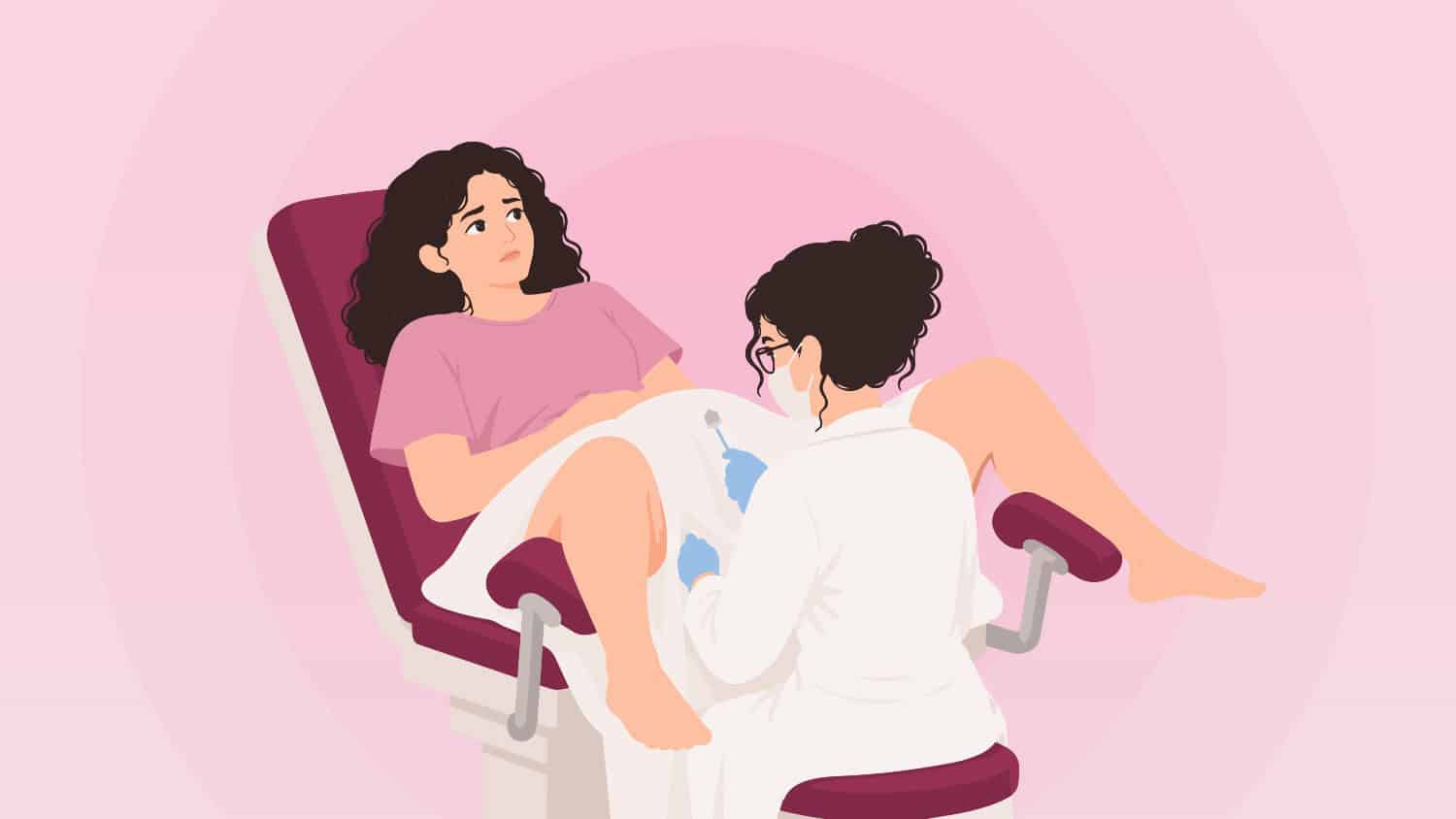
After screening or when symptoms cause concern, the next goal is to examine the cervix more closely and, if needed, take a tissue sample. A common next step is colposcopy (a close examination of the cervix using a magnifying instrument). During the exam, a speculum (an instrument that gently holds the vaginal walls apart) is placed inside the vagina to see the cervix.7
A biopsy (which involves taking a small sample of tissue) may then be performed to examine an abnormal area. A pathologist (a doctor who evaluates cells and tissue using a microscope) will analyze the sample. The biopsy is the crucial part because it can reveal if the cells are precancerous or cancerous. If the results show cervical cancer, additional testing is done to determine the extent of the spread.7
What are the stages of cervical cancer?
Once cervical cancer is diagnosed, one of the primary questions is, “What stage is it?” The stage indicates the cancer’s location and how far it has spread. But it is not just a label. It helps decide which treatments are likely to be effective.8
| Stage | What it generally means |
| Stage I | Cancer is limited to the cervix. |
| Stage II | Cancer has grown beyond the cervix into nearby tissue or the upper vagina. |
| Stage III | Cancer has spread farther within the pelvis and may involve lymph nodes or affect kidney drainage. |
| Stage IV | Cancer has reached nearby organs or has spread to distant parts of the body. |
Each stage also contains subcategories. This means that the stage number alone does not provide all the details.
How is cervical cancer treated?
Rather than following a one-size-fits-all approach, your treatment plan will be based on your specific type of cervical cancer. Factors such as the stage of the cancer, your overall health, and your own preferences, including whether you wish to have children in the future, will all influence the treatment plan.9
| Stage | Typical treatment options16 |
| Stage I | Conization (removal of a cone-shaped section of the cervix), hysterectomy (removal of the uterus and cervix), or fertility-preserving surgery may be used for selected early cancers. Radiation with chemotherapy is used in some cases. |
| Stage II | Radiation therapy with chemotherapy is common. Surgery is considered for some cancers that have not spread far beyond the cervix. |
| Stage III | Radiation therapy with chemotherapy is commonly used. Brachytherapy (radiation placed inside or very close to the cancer) may be part of the treatment. |
| Stage IV | Treatment depends on where the cancer has spread and can include radiation, chemotherapy, immunotherapy (treatment that helps the immune system attack cancer), targeted therapy, or treatment to relieve symptoms. |
Very small early cancers can sometimes be removed through conization (removal of a cone-shaped section of the cervix). Other early cancers may necessitate a hysterectomy (removal of the uterus and cervix).
For carefully selected early cancers, a radical trachelectomy (removal of the cervix but leaving the uterus intact) may maintain the potential for pregnancy.9
When cancer has grown beyond the cervix, treatment often involves the combination of radiation therapy and chemotherapy. Brachytherapy (radiation that is directly administered to or extremely near the tumor) may also be a component of treatment for many patients.916
Certain advanced or recurrent cancers can also be treated with immunotherapy (medicines that train the immune system to target cancer) or targeted therapy (medicines that act on specific factors involved in cancer growth).16
Will treatment for cervical cancer impact fertility?
It can, so it is important to consider fertility before beginning treatment if having children in the future is important to you. Some procedures preserve the uterus, while others do not.
Radiation and specific chemotherapy options may also impact the ovaries, uterus, or pregnancy capability.10
For some women with small cancers restricted to the cervix, fertility-preserving treatments may be an option. Fertility-preservation options, such as freezing eggs, might be discussed with a fertility expert before treatment.10 This discussion may be difficult when your immediate concern is the cancer itself. Nevertheless, having the conversation early can provide the clearest understanding of which choices remain accessible.
What is the survival rate for cervical cancer?
The prognosis largely depends on how extensively the cancer has advanced. The National Cancer Institute (NCI) reports that the five-year relative survival rate (compared with similar people without cancer) is about 92% when cervical cancer is found while still confined to the cervix.1
| Extent of disease at diagnosis | 5-year relative survival rate1 |
| Early stage, cancer still confined to the cervix | About 92% |
| Spread to nearby tissues, organs, or lymph nodes | About 64% |
| Spread to a distant part of the body | About 21% |
| All people with cervical cancer, combined | About 69% |
The numbers are lower when the cancer has metastasized (spread) to local or distant locations in the body. But statistics describe large populations. They cannot accurately predict an individual’s outcome.
Factors including your stage, type of cancer, age, general health, and whether the cancer is new or recurrent all influence your individual prognosis.11 Though a percentage may provide context, it cannot replace a discussion about your personal situation.
How can cervical cancer be prevented?
Many cervical cancers can be prevented because we can act at several points before cancer develops.
The very first step is HPV vaccination. The routine schedule recommends vaccination at age 11 or 12, but you may start as early as age 9. You may also complete the series at any age through 26 if you were not vaccinated earlier.12
Some adults up to age 45 might consider the vaccine after consulting with their clinician about their circumstances. The vaccine protects individuals from new infections; it cannot cure an existing infection.12
The second line of protection is through screening. Screening can detect either high-risk HPV or abnormal cell changes before the changes develop into cancer.6
The third step involves follow-up. A screening test cannot safeguard you if any abnormal findings are never further evaluated. Avoiding tobacco also lowers cervical cancer risk.3
What if screening or vaccination costs are a concern?
In the United States, most insurance plans cover Pap and HPV tests without a copay, coinsurance, or deductible. If you have insurance, check your plan for its specific coverage. If you do not have insurance, free or low-cost cervical screening programs may be available.13
Most health insurance plans also cover vaccines, including HPV vaccination. Check your plan for cost and in-network provider requirements. Eligible children may receive vaccines at no cost through the Vaccines for Children Program.14
When to see a doctor?
Many of these symptoms have causes other than cancer. However, new or persistent bleeding, discharge, or pelvic symptoms deserve a visit to your OB-GYN. Arrange a medical evaluation if:
- You have repeated or unexplained bleeding after sex.
- You develop bleeding or spotting between periods.
- Your periods become noticeably heavier or longer without a clear explanation.
- You have any vaginal bleeding after menopause.
- You develop persistent watery, bloody, or unusual vaginal discharge.
- You have ongoing pelvic pain or pain during sex.
- You received an abnormal HPV or Pap result and have not completed the requested follow-up.
Seek emergency care if:
- You are soaking through one or more pads or tampons every hour for more than two hours in a row.15
- You have chest pain, shortness of breath, dizziness, or lightheadedness.
- You faint, or you have severe weakness or confusion.
Frequently asked questions
Not necessarily. HPV can remain dormant for many years and then be detected after a prior negative result. A positive result cannot indicate when you acquired HPV or the source of transmission.
Yes. Early cervical cancer often does not show signs or symptoms, which is why screening is so important. Symptoms tend to emerge more when the disease starts to spread and invade.
For most women, it takes years for the virus to progress from a persistent infection to precancer and then to cervical cancer.
Yes. Recurrent cancer is when a tumor returns after treatment. Follow-up appointments after treatment can monitor your recovery, treat any side effects, and investigate symptoms that may suggest recurrence.
Yes, many women can resume their sex life after treatment, although the frequency and timing will depend on the treatment. Treatments such as surgery, radiation, and chemotherapy can also impact the vagina and cause dry, painful sex as well as a loss of sexual desire, which can be discussed during follow-up treatment.
Yes, although vaccination significantly reduces the risk of certain cancer-causing HPV types, it can’t protect against all of them. An individual’s risk of developing cervical cancer can be reduced through follow-up screening.
Last medically reviewed on
References
Our commitment to accuracy is paramount; we use high-quality sources, including peer-reviewed studies, to support the facts in our articles. Learn more about our Editorial Process.
- National Cancer Institute (NCI), Surveillance, Epidemiology, and End Results (SEER) Program. Cancer Stat Facts: Cervical Cancer. n.d. seer.cancer.gov
- National Cancer Institute (NCI). What Is Cervical Cancer? Updated June 15, 2023. cancer.gov
- National Cancer Institute. Cervical Cancer Causes, Risk Factors, and Prevention. Updated August 2, 2024. cancer.gov
- National Cancer Institute. HPV and Pap Test Results: Next Steps after an Abnormal Cervical Cancer Screening Test. Updated June 6, 2024. cancer.gov
- National Cancer Institute. Cervical Cancer Symptoms. Updated October 13, 2022. cancer.gov
- American College of Obstetricians and Gynecologists. Screening for Cervical Cancer. Committee Statement No. 28. Obstet Gynecol. 2026;148(1):e63-e67. doi:10.1097/AOG.0000000000006257. acog.org
- National Cancer Institute. Cervical Cancer Diagnosis. Updated March 1, 2024. cancer.gov
- National Cancer Institute. Cervical Cancer Stages. Updated May 16, 2025. cancer.gov
- National Cancer Institute. Cervical Cancer Treatment. Updated April 3, 2025. cancer.gov
- National Cancer Institute. Female Fertility and Cancer Treatment. Updated May 14, 2025. cancer.gov
- National Cancer Institute. Cervical Cancer Prognosis and Survival Rates. Updated April 27, 2023. cancer.gov
- Centers for Disease Control and Prevention. HPV Vaccine Recommendations. July 9, 2024. cdc.gov
- Office on Women's Health. Pap and HPV Tests. Last updated October 24, 2025. womenshealth.gov
- Centers for Disease Control and Prevention. HPV Vaccination. August 20, 2024. cdc.gov
- American College of Obstetricians and Gynecologists. Abnormal Uterine Bleeding. Last updated December 2021; last reviewed August 2025. acog.org
- National Cancer Institute. Cervical Cancer Treatment by Stage. Updated April 3, 2025. cancer.gov
Update history
Our team monitors the health and wellness space to keep articles current.
Current version (October 6, 2026) — Medically reviewed by Dr. Sara Ahmad Qureshi, MBBS, MS. Written by Dr. Aqsa Munir, MBBS.